
Most people who drink Colombian coffee have never been asked where, exactly, it came from. The bag says Colombia and that feels like a complete answer. It has for decades. Colombia became synonymous with quality the way certain words become synonymous with comfort: through repetition, through trust, through a kind of inherited familiarity that nobody questions.
But Colombia is not a flavor. It is a geography. And that geography, when you follow it closely enough, tells a very specific story.
In the southern highlands, where Huila meets Nariño and the Andes push coffee farms above 1,800 meters, the nights are cold enough to slow the ripening of the cherry. That slowness is not an inconvenience. It is the reason the bean develops the kind of sweetness that no roasting profile can manufacture. The elevation, the volcanic soil, the equatorial light filtered through cloud cover: these are not marketing details. They are the actual ingredients of the cup. The difference between a coffee that tastes like Colombia in general and one that tastes like a specific mountain on a specific harvest is the difference between a postcard and a place you have actually been.
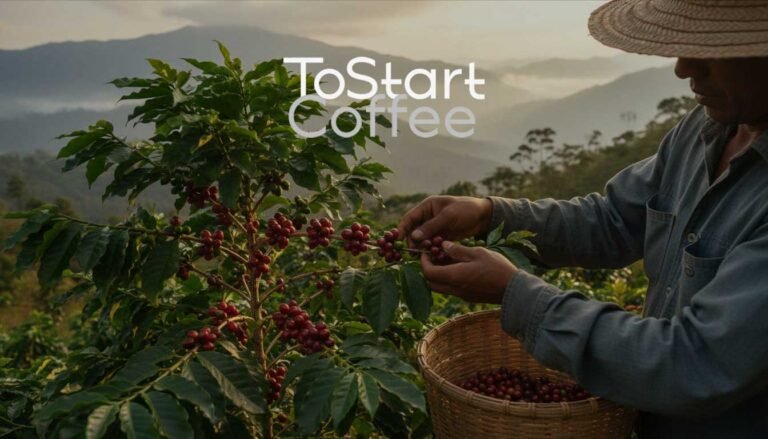
At ToStart, we think that difference is worth naming. Our coffee is roasted at origin, shipped from Atlanta, and traceable to the Colombian highlands where it was grown and handpicked, one cherry at a time. When we say Colombian coffee, we mean a specific address, a specific altitude, a specific set of hands that decided each cherry was ready.
That precision is not a luxury. It is the most honest thing a coffee brand can offer. Because the moment a name becomes a vague promise, the story behind it disappears. And the story, as anyone who has ever tasted a truly exceptional cup already knows, is exactly what makes it worth waking up for.